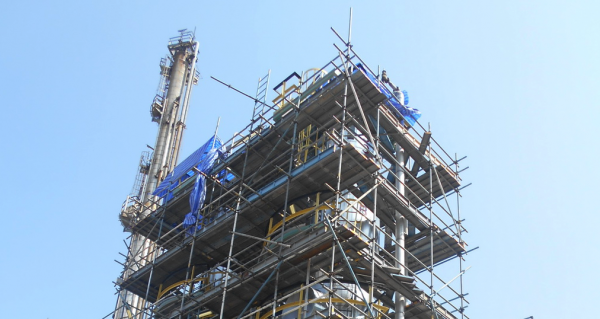
Seasonal turnarounds and shutdowns are more than just maintenance events—they are a high-stakes test of a company's operational efficiency and planning capabilities.
These periods demand the coordination of maintenance teams, contractors, tight schedules, and rigorous safety standards, all while minimizing downtime and costs. For many companies, the success or failure of a turnaround or shutdown directly reflects the strength of their contractor management practices. A well-executed event can signal well-ordered systems and processes; recurring challenges may expose critical gaps in systems and processes. In many cases, even companies with healthy contractor management processes find opportunities to improve during a shutdown or turnaround.
In this blog, we'll explore the top 5 most common health indicators that pop up during these high-stakes events and provide actionable insights to improve your contractor management programs.
Health Check #1: Planning and Coordination
One of the earliest indicators of a healthy contractor management program shows up in the planning and coordination of the shutdown or turnaround event. As successful execution depends on meticulous planning and seamless coordination between contractors and internal teams, if schedules are met and disruptions are minimal, it often signals that the contractor management program is healthy.
On the other hand, if the meticulously planned updates are not met and disruptions are sizeable – there may be a red flag to address.
Red Flags to look for: Delays, miscommunication, or resource bottlenecks during a turnaround highlight weaknesses in planning, scheduling, or contractor selection.
Health Improvement Actions: Communicate expectations and mitigation plans with suppliers well in advance of the shutdown or turnaround event. Each known supplier should have their onboarding checks completed as far in advance as allows, including expected schedules, points of contact, certification and safety checks, and risk mitigation plans.
Establishing easy-to-access communication channels, such as in a digital solution, can help suppliers and contractors to make potential concerns known well before any ramifications arise.
Health Check #2: Compliance and Safety
Seasonal turnarounds and shutdowns often require adherence to strict safety protocols and regulatory compliance – all of which needs to be managed in a high-pressure environment. The impact of not managing these risks well can have long-standing financial and operational impacts on a company, so it is absolutely critical to make sure that vetting and preparation in this area are not handled lightly.
Red Flags to look for: Increased incidents, near misses, or safety violations during a shutdown could indicate gaps in experience, training, compliance checks, or monitoring processes. Suppliers that have a recurring pattern of not delivering work deliverables or labor within expected timeframes should be flagged for investigation and conversations.
Health Improvement Actions: A well-functioning contractor management program ensures contractors are pre-qualified with the required skillsets, trained, compliant, and trustworthy. More often than not, we hear that as the volume and pressure of hiring contractors increases, the supplier vetting and onboarding processes reduce for the sake of speed.
Do not give into the temptation to reduce the supplier and contractor onboarding protocols as they are in place for a reason – to protect the business and work environment. Instead, pre-qualify as many suppliers and back-up suppliers in the months before the turnaround and do not forget to ask about the history of delivery in fast-paced and high-pressure projects.
Health Check #3: Scalability and Adaptability
The ability to scale up contractor operations and adapt to dynamic needs during shutdowns reflects the flexibility and readiness of the contractor management program. Turnarounds and shutdowns are notorious for requiring fast-paced and high-risk changes throughout the project period, and having the ability to adapt to the required changes are crucial.
Red Flags to look for: Struggles with resource allocation, failure to onboard contractors swiftly, or inability to handle unforeseen challenges reveal weaknesses in adaptability. Challenges with collecting information in a timely manner can also reflect weaknesses in the ability to adapt.
Health Improvement Actions: In many cases, these struggles are the direct result of not having the right digital tools in place to manage contractors in real-time.
Reconfigured ERPs, indirect procurement tools, and homegrown solutions can all contribute to a functioning contractor management program when the contractor volumes and pressures are low, but they are almost always ineffective for managing the constantly changing complexities and volumes of a turnaround.
Assess your company's digital tools and look for solutions that are purpose-built for high-volume and complex contractor management, such as a contractor management solution.
Health Check #4: Cost and Resource Management
Cost and resources are often the first two areas in which the effects of a turnaround or shutdown are most immediately felt – good or bad. Efficient cost management and resource allocation during turnarounds and shutdowns suggest the company has effective controls in place to prevent overspending and ensure productivity.
Red Flags to look for: Budget overruns or gaps in visibility to spending, relating to either delayed invoicing, vague spend reporting, or lack of real-time spending data. Resource wastage in the form of duplicated task assignments, lack of clear direction, and miscommunications during shutdowns may point to inadequate contractor oversight or poor project management.
Health Improvement Actions: Ensure that contractor management tools are set up with real-time spend and budget reporting that are visible to both managers and suppliers. This not only ensures that potential overruns can be caught ahead of time, it also eliminates time waste in the form of chasing down spend data every day.
If the digital solution allows for threshold notifications when budgets are getting close to an overrun or invoices are not being submitted in a timely manner can also help mitigate some of the challenges that come with complex spend management.
Health Check #5: Performance Tracking and Instant Analysis
Successful turnarounds provide clear performance data, offering insights into contractor efficiency, work quality, and adherence to timelines. Lack of measurable KPIs or inconsistent performance tracking undermines accountability and continuous improvement. Further, ensuring that both turnaround managers and their suppliers have access to real-time performance metrics is crucial to keeping a successful turnaround or shutdown on track.
Red Flags to look for: Inability to measure contractor performance in real-time, lack of historical performance data, and absence of benchmarking metrics that can be used for improvement or performance comparisons indicate a subpar contractor management program.
Health Improvement Actions: Set up standardized KPIs for contractor performance that can be measured and tracked in real-time during turnarounds. These might include metrics like on-time completion rates, safety incident rates, budget adherence, and work quality scores.
Having historical performance data allows companies to identify trends, benchmark against industry standards, and make data-driven decisions about contractor selection and management strategies for future turnarounds.
Conclusion
Regular health checks during turnarounds and shutdowns provide valuable insights into the effectiveness of contractor management programs. By monitoring these five key areas – planning and coordination, compliance and safety, scalability and adaptability, cost and resource management, and performance tracking – companies can identify areas for improvement and build stronger, more resilient contractor management capabilities.
Remember, the goal is not just to complete turnarounds and shutdowns successfully, but to continuously improve processes and relationships with contractors to achieve better outcomes, lower costs, and enhanced safety performance over time.
About NHD
For over 30 years, NHD has been providing an intelligent, all-in-one solution that bridges the gap between your company and your external workforce in the full source-to-pay cycle.
- Integrated communication processes with suppliers; from demand to payment
- Full worker profile visibility and management including certification and documentation tracking
- Quotation process supported by approved unit rate catalogues
- Effective time management with integration into gate systems
- Provides 100% contract compliance through standardized catalogues
- Dynamic auditing for process and rate compliance
- In-depth reporting and analytics for fatigue management, earned value management, contractor/site performance, and more
- Seamlessly integrates with SAP ERP/S4/Hana and more